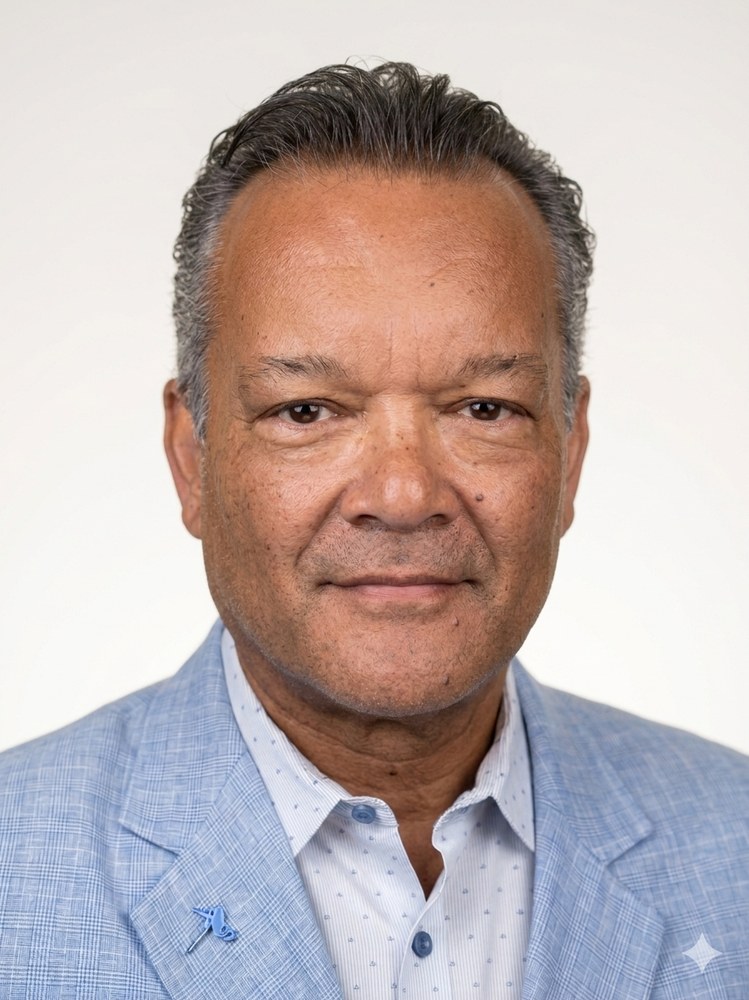
Five distribution builds across MGAs, MGUs, and Fortune 500 carriers. $800M+ in cumulative premium scaled — agency channel, small commercial multi-line, technology-led. PacificComp turned from a 200%+ combined ratio to underwriting profit in 32 months.
Twenty years scaling commercial insurance distribution. Currently VP, National Distribution at Berkley Small Business Solutions (W.R. Berkley Co.). Seven16 Group is the workshop where I tinker on retail-agency problems the field hasn't fixed — not a side business, just where the creativity goes.
The mandate I'm built for, sized to the conversations underway right now — VP- and SVP-level seats running the agency channel for small commercial multi-line carriers, MGAs, and MGUs that are scaling on technology and data-driven distribution.
1,400+ agency partners recruited across five distribution builds. 125 newly appointed agencies at Berkley in 18 months with 600+ active portal users. 30 of the Top 100 commercial brokerages signed inside 90 days at Kinetic, before the first policy bound. Cluster and aggregator partnerships at PacificComp — ISU Steadfast, Renaissance, Combined Agents of America, Pacific Interstate, United Agencies, We Insure — scaled small WC to $32M through a single underwriter. Negotiated the Berkley Connect joint venture opening ~2,000 wholesale retail agents for 2026 activation.
Currently leading distribution across Workers' Comp, BOP, Non-Fleet Trucking, and Business Auto (2026 launch) at Berkley Small Business. Prior multi-line small-commercial leadership across high-hazard WC, transportation, and PEO co-employment programs at Pride Risk, Atlas General, Kinetic, and PacificComp / CopperPoint. Multi-line operating discipline across carrier paper, MGA programs, and InsureTech MGUs.
Selected for the W. R. Berkley Co-Pilot Power User Program; AI Committee member at Berkley Small Business. Launched BOP portal (40 states) and Workers' Comp portal (37 states) with BOP submissions +795% and hit ratio 15.6% → 21.8%. Built the straight-through-processing portal at PacificComp — $250K to $32M managed by a single underwriter. Personally led Salesforce, Novidea, and HubSpot CRM implementations — no consulting army. Multi-channel marketing engine driving 164K+ LinkedIn impressions and 369 partnership-sourced agent leads.
Second-in-command to the Regional President at PacificComp — 250-FTE unit inside a 700-FTE carrier. Took the in-force book from $65M to $311M over six years while moving the combined ratio from over 200% (2014) to underwriting profit (2017). Covered Underwriting for 120 days through a leadership transition while running distribution in parallel — demonstrating the cross-functional operating-system integration this kind of seat is structured to deliver.
A 30+ minute conversation with Daniel Palacios — podcaster and Co-founder & CRO of Braven — on how distribution actually scales, where automation lands versus stalls, and the operating decisions behind the difference.
I'm an introvert who often shows up as relaxed and playful — warmth and humor are how I get close, and how I lower the temperature in the room. Underneath that is a long-haul builder who carries weight. Twenty years in commercial insurance distribution. One marriage. One industry lane. Most of the work spent fixing what other people gave up on.
Failed the California P&C licensing exam twice. A third would have ended me. I passed and kept studying. I'm a quiet intellectual — not academic, just always learning. MBA Pepperdine (Cum Laude). MA Political Science. USC Young Leaders Program at the Center for Effective Organizations. SPIN, Strategic Selling, Conceptual Selling, Miller Heiman, LAMP. ADP's mid-1990s sales training — comparable to Six Sigma certification for technical selling — became the foundation under every distribution role since. Scripture since 1991. Munger, Buffett, Marks. Markets and human behavior for decades. I look for patterns and tells, then move quickly to action.
Employee #3 at Pride Risk Solutions. First distribution leader hired at Atlas General. Employee #2 at Kinetic Insurance. Built the MGU's broker network from a blank page; recruited 30 of the Top 100 commercial brokerages in 90 days before the first policy bound. Launched "alternative risk" workers' comp in California — a PEO co-employment product most brokers didn't understand. Originated the joint venture point-of-sale model that's been re-applied at every build since. M&A integration on both sides of the deal — retained the distribution organization through PacificComp's sale to CopperPoint, then led the rollover of the Alaska National California workers' comp book onto PacificComp paper. I have a bias for action. When something is broken, I'd rather be the one who carries it back to working.
Built the verticalized distribution model at CopperPoint. The 90-Day Reset. The intel-capture loop. The straight-through small-WC platform — $250K to $32M at a 25% in-force loss ratio over six years, managed by one underwriter. Salesforce scorecards auto-emailed to branch and agency leaders the same day. Built the broker-enablement system at Pride Risk — audio, video, and PDF training assets plus in-person regional events filling rooms with 50–100 agents at a time. Built the offshore BPO model at Atlas, in India, for overnight account setup in Duck Creek — enabling 10–12 underwriters to process 20,000+ submissions annually. Built the sub-wholesaler co-branded distribution platform that scaled national reach without scaling internal headcount. Built so the next 100 deals process the same way as the first.
A formal Big Five (OCEAN) assessment, layered with competency scoring against a 99-percentile benchmark database. What follows is the data underneath the leadership style I describe everywhere else on this site — the operator profile, validated.
Out-of-the-box thinking, maxed. "Sees the world through what's possible, not what exists."
Strategic foresight, conceptual planning, and brainstorming new approaches — top decile.
Mobilizes the team toward the vision, focuses on outcomes, trusts capable people to find the path.
Takes ownership of outcomes. Doesn't deflect. Carries the weight personally.
The data tells a coherent story. I'm wired as a strategic operator who thinks in possibilities — default mode is to see what doesn't exist yet, build the architecture for it, and rally a team behind the vision. The assessment scores Creativity at 10/10, Strategic Agility at the 86th percentile, Formulating Strategy at 99/99, and Brainstorming at 98.
Beneath that strategic surface sits an operator's spine: Self Responsibility 8/10, Crisis Response 7/10, Influence 7/10, Decisiveness 8/10. Directive Presence at the 84th percentile confirms it — vision plus voice plus the willingness to make the call.
My dominant leadership archetype is Navigator (78th percentile) — point at the horizon, name the destination, trust capable people to find their own path. The secondary style is Mentor (62) — coach through people's strengths rather than around their weaknesses.
Consensus leadership (28) sits at the bottom of the style ranking by design. I'll listen, but I won't build by committee. Supervising Style scored 32nd percentile — the data confirms I'm not the operator who watches over shoulders. I set the standard, name the outcome, and let craftspeople do their craft.
Originality: 7 (Strategic). I am the source of new ideas and an advocate of new technology, improved processes, and organizational growth. Channeling Effort: 4 (Spontaneous). I move with flexibility and intuition rather than scripted process. Extraversion: 6 (Varied) — I'm capable in groups but recharge in solitude; the assessment puts me in the Uniter quadrant (extraverted and inclusive). Agreeableness: 5 (Facilitating). Balanced give-and-take, with one tell — Compliance scores 3, meaning I'll ask why before I follow direction. Nature of Reaction: 6 (Balanced). I feel the pressure (Intensity 7), recover constructively (Recovery Time 6), and stay clear-thinking enough to act through crisis (Crisis Response 7).
The same assessment that surfaces the strengths surfaces the trade-offs. Structure scores 3/10. Detail Orientation 7/10 (big-picture, bored by routine). Goal Orientation 4 (realistic targets, not unrelenting stretch). Holding Others Accountable: 41st percentile. Tactical Execution: 20. Time Management: 7.
These are not deficiencies — they are the design. The operator who builds five distribution shops from scratch is not the same operator who runs a tightly scripted compliance floor. Self-awareness around the trade-off is what makes the strengths usable — the structure and operational discipline get hired or systematized around the work, not forced into me. I lead the vision; I build the team that runs the cadence.
The single highest score on the entire assessment outside Creativity is Perpetually Improves Oneself: 95th percentile. I treat my own capabilities as fluid — every project is a place to add to the toolkit. The Growth Mindset Index (65) is largely built on that one trait.
Pair the strategic-creative wiring with the commitment to keep learning, and the operating signature lands cleanly: build the vision, set the direction, develop the people, learn from every iteration, and never stop sharpening the saw.
Most folks don't know this: I failed the California commercial licensing exam twice. I was at Allianz Trade Credit at the time. Failing a third time would have meant immediate termination. I passed, and history was made.
But the deeper reason I stayed in commercial insurance for two decades came earlier. I joined ADP in 1995 — an era when its corporate sales training was rotating among the top three programs in America, alongside IBM and Xerox. Then-CEO Josh Weston, who had built that culture, spoke to my new District Manager class and said something I never forgot:
“There is no better place to sell than in an environment where it's compulsory — by the government — to possess a specific product or coverage to be in compliance.”
Trade credit had elements of that. But when I pivoted to workers' compensation, then commercial auto, then BOP and general liability — lines where the law itself compels coverage — I excelled. The economics of compulsory lines do work for any operator who shows up consistently. I was good at this.
Between ADP and Allianz I spent a season at Parsons Group / Accenture Consulting as an Account Executive selling Y2K solutions, PeopleSoft implementation, accounting & finance solutions, and business process re-engineering to Fortune 1000 clients — Bank of America, The Walt Disney Company, NBC Studios, Avery Dennison, Countrywide Home Loans. I called on VP Finance, CFO, CIO, CTO, occasionally CEO. Strategic planning was part of every engagement. The muscle I built there — the ability to speak the language of every department head and translate between them — is what I brought back into insurance. It's the difference between selling a quote and aligning a carrier, a distribution channel, an underwriting org, and a broker around the same plan.
And the people in this industry are more grounded than the people I worked with in tech and consulting. Less ego. More figuring it out. I made friendships that have lasted twenty years.
Two decades of distribution work means deep relationships across every layer of the commercial insurance market — from independent agency networks and cluster aggregators, to Top 100 retail brokerages, to specialty wholesale brokers. Partnership depth is what turns a launched product into a scaled book. Different channels move different products. At PacificComp, cluster networks supercharged the STP small-WC platform from $250K to $32M; Top 100 retail and specialty wholesale carried the middle-market book to $311M.
Five distribution builds across two decades — specific lines, specific numbers, specific years. Growth is the easy half. Profit, portfolio discipline, and capital efficiency are the parts most operators avoid.
Joined PacificComp December 2014 on a stalled book with combined ratio over 200%. Submission flow scaled from ~8,000 in 2014 to ~20,000 by end of 2015, sustained around ~25,000/year through the rest of the run. Verticalized into middle-market accounts $250k+ — restaurants, hotels, auto dealers, grocers. Returned to operating profit in 2016, underwriting profit in 2017 (just under 100% CR). Acquired by CopperPoint 12/31/2017; post-acquisition, led the rollover of Alaska National's California WC book onto PacificComp paper as part of the integration.
Target side: Joined the PacificComp executive team through Alleghany's late-2017 sale to CopperPoint Insurance. Stay agreement renewed for three years; retained the distribution organization, broker relationships, and book continuity through the integration. Distribution was a strategic asset CopperPoint specifically retained. Acquirer side: Post-acquisition, led the rollover of Alaska National's California WC book onto PacificComp paper — re-papering, broker communication, claims continuity, and book retention through the transition. Operational distribution integration on both sides of the deal.
Inside the larger turnaround above, built a straight-through small workers' comp portal at PacificComp (continued post-acquisition under CopperPoint) in California's most competitive market. Cluster and aggregator partnerships — ISU Steadfast, Renaissance, Combined Agents of America, Pacific Interstate, United Agencies, We Insure — were the supercharger that drove submission flow and binding velocity. 25% in-force loss ratio sustained across the run, managed by a single underwriter.
First distribution leader hired; grew the network from 200 to 400+ agencies in two years. Submission volume tripled from under 10,000 to just under 30,000 annually, processed via an offshore BPO model enabling 10–12 underwriters to handle the full volume. 50+ underperformers terminated; average premium and submission quality rose accordingly.
Embedded trading partner for Southeast Personnel Leasing, a Florida-based PEO. Launched "alternative risk" workers' comp for high-hazard, high-x-mod middle-market accounts in construction and transportation. Solved the broker-education problem killing early conversion — agents defaulted to traditional WC at 20–30% higher prices because they couldn't sell the PEO co-employment structure. Built audio/video/PDF training assets, hosted regional trainings filling rooms of 50–100 agents, and personally co-presented every complex account. $15M in WCP after Year 1, $40M+ in-force at 24 months; closing ratio moved from 10% to 20%+. This is where the joint venture point-of-sale model originated.
Employee #2 at a venture-backed MGU. $25M written against a $7M target. 30 of the Top 100 commercial brokerages recruited in 90 days, before the first policy bound. Ran the entire distribution operation on Google Docs and email for 14 months before adopting Novidea CRM at $45M premium. By year-end, the network grew to over 65 appointed agencies and 400 branch offices.
Joined July 2024 as VP, National Distribution. Inherited a unit ranked near dead-last of 65 WR Berkley operating units; as of Q1 2026, middle-of-pack. Soft-launched Main Street products — Workers' Comp, BOP, with Business Auto in Q4 2026. Primed the retail agency network from January 2025; grew from 0 to 125 newly appointed agencies with over 600 active portal users. Wholesale trading-partner network refocused from 42 to 24 — fewer, deeper, better fit. Portal entries grew from under 50,000/year to over 100,000/year. Book approaching $100M, on track to well exceed by year-end.
Distribution scaled across Pride Risk, Atlas, CopperPoint, Kinetic, and Berkley Small Business. The same operating playbook iterated against different lines, eras, and market conditions. Each build run with the leanest team that could deliver — capital deployed against systems, not headcount.
I serve on the AI Committee for Berkley Small Business Solutions. AI shows up in my work every week — on real producers, real territories, real accounts. Not theory. Not someday.
Seven16 lives downstream of this practice. What I learn at the operator's desk is what I tinker on for the operators who don't have a committee yet.
Eighteen months ago the conversation was capacity and rate.
Today it's speed, hit ratio, and book quality.
Translation for distribution leaders: growth has to come from new logos, share-of-wallet expansion, and submission flow — not the same book getting bigger on automatic increases. WTW's Insurance Marketplace Realities 2026 declared nearly every commercial line aside from excess casualty in soft-market territory. Commercial auto has moderated to 10–15% adjustments instead of the 20%+ hikes of recent years. Workers' comp is one of the more stable lines entering 2026.
A workshop, not a business — where my creativity meets the retail-agency problems I see in the field.
The name is personal. 7, 1, 6 — three numbers that map to how I'm wired: the seeker, the pioneer, the builder. I hold that frame through a Christian lens, not as divination but as archaeology — digging up what God wrote in before I had any say in it.
I'm wired to tinker. Twenty years on the carrier and MGA side surfaces a long list of problems most insurance technology never bothers solving from a retail agency point of view — the AMS/CRM that doesn't fit how an independent agency actually works, marketing that bleeds margin, lead generation that breaks in a soft market, producer training nobody refreshed since the last hard market, specialization paths that retain people instead of burning them out. Seven16 is where I go to build something for those.
Think less Tinker Bell and more the pots-and-pans guild she came from — the corner of the workshop where useful tools get made out of whatever's lying around. AI and modern coding tools have collapsed the cost of building. What used to take a consulting engagement now takes a few weekends and a sharp prompt. So I build — not as a side business, because there is no business, but because the tinkering is part of how I think about the field. The operator runs faster when the bench stays open.
The fastest way to meet me is in person. Below is my 2026 calendar — industry conferences and field travel with the Berkley Small Business team, plus a speaking engagement coming up in September. If our paths cross, reach out — I'll make time.
Different conversations belong in different rooms. Pick what fits — each path routes to the right context on the way in.
Conference keynotes and corporate events on commercial insurance distribution, AI in operations, and the craft of selling.
Conversations on commercial distribution, sales discipline, carrier turnarounds, M&A integration, and AI in underwriting operations.
Board work and advisory engagements as my next chapter unfolds. Open conversations welcomed on scope, timing, and fit.
Notes traded with operators, builders, and fellow tinkerers on retail-agency AMS/CRM, marketing systems, lead generation, producer training, and the AI tooling making it all cheaper to build.
Interviews, contributed articles, and quotes for trade publications and industry outlets in insurance and insurtech.
I'm open to speaking and conference invitations, podcast guest appearances, media inquiries, and conversations with operators thinking seriously about commercial insurance distribution and Seven16's properties. Tell me what you're working on. I'll come back with how I might help — or if I'm not the right person, who is.
Direct, early, with your best read on the situation. That's the briefing that gets a fast reply.
Recruiters and search partners: view the resume → · print-ready, save-as-PDF from any browser.